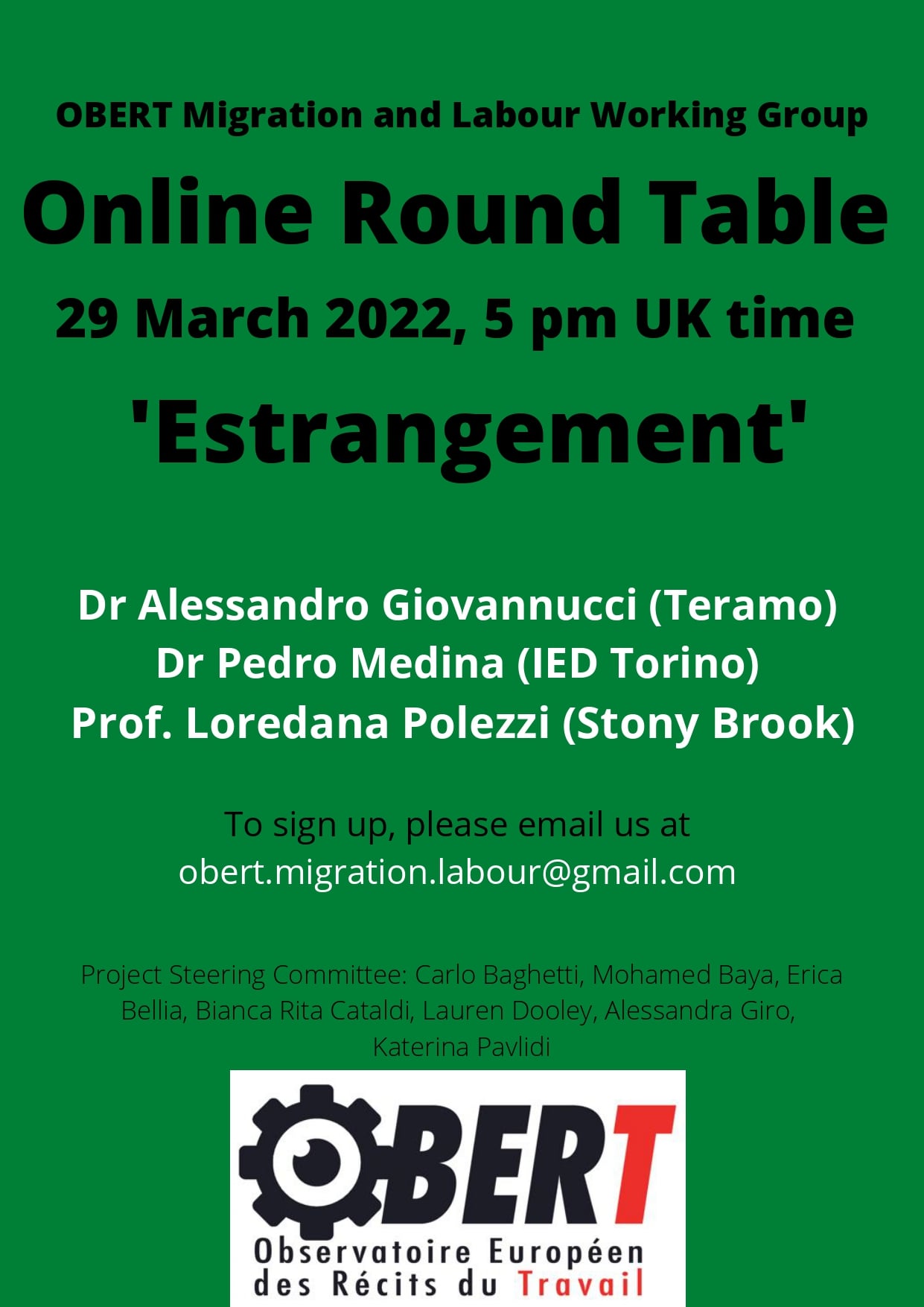
‘Estrangement’ or ‘defamiliarisation’ is a term coined by the theorist of Russian formalism Viktor Shklovskii, who in his famous essay ‘Art as Device’ (1916) argued that art is a device for making people look at the world anew. While the word ‘estrangement’ in Russian indicates the transformation of something familiar into strange, it also carries the meaning of distancing, displacing or pushing something or someone aside (ostranenie). By transforming something familiar into strange, art has the power to displace or push the readers, listeners or viewers away and simultaneously invite them to look at the estranged thing with fresh eyes, or as Shklovskii put it, ‘to make the stone stony’. Within the broader context of the Avant-garde and pre-revolutionary Russia within which Shklovskii produced his essay, new modes of looking at the world meant new modes of being in the world. Thus, by being a device for inflicting new modes of looking, art in its Shklovskian and Avant-garde understanding, is by extension a device for revisiting older and producing new relationships between individuals and the environments which they inhabit.
Some of the questions we aim to explore in ‘ESTRANGEMENT’ include but are not limited to:
- How can we use the notion of estrangement to approach literature and art dealing with labour and migration in a cross-thematic area study?
- Other estrangement definitions might be suitable in order to study the representation of migration and labour?
- Are there specific estranging devices used in the artistic representation of migration and labour? (e.g. irony)
- Studying the artistic representation of migration and labour under the microscope of estrangement could introduce new standpoints on these realities?

 Projet OBERT
Lascia un commento